Click on a photo to enlarge.
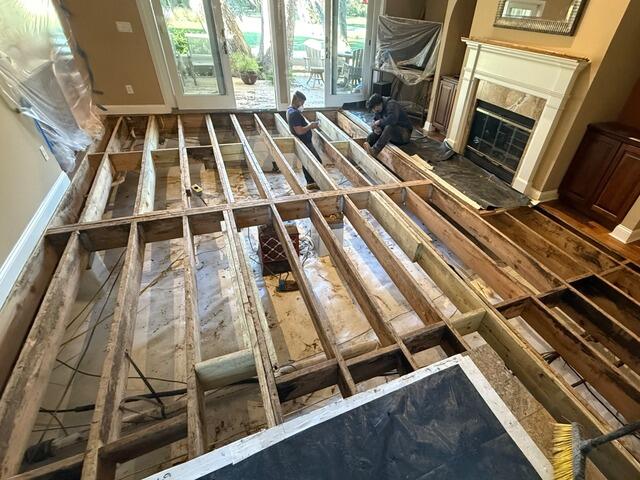
Moisture in a crawl space can cause subfloor damage, leading to warping, rot, and mold growth. That's what happened here for this homeowner. Our team removed the damaged subfloor by carefully cutting out the affected sections, ensuring structural integrity, and then replaced it with new subfloor material to restore stability and prevent future issues.
We installed foundation piers to stabilize the customer’s home and fix issues caused by soil shifting or settling. The piers help support the foundation by reaching stable soil or bedrock, preventing further movement and keeping the home secure.
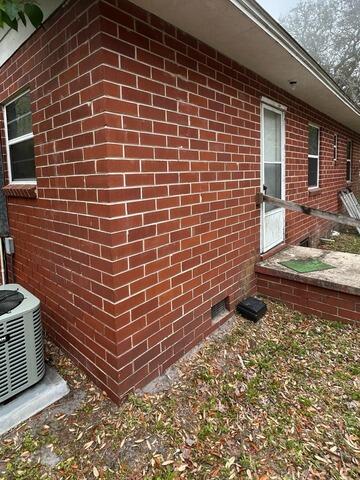
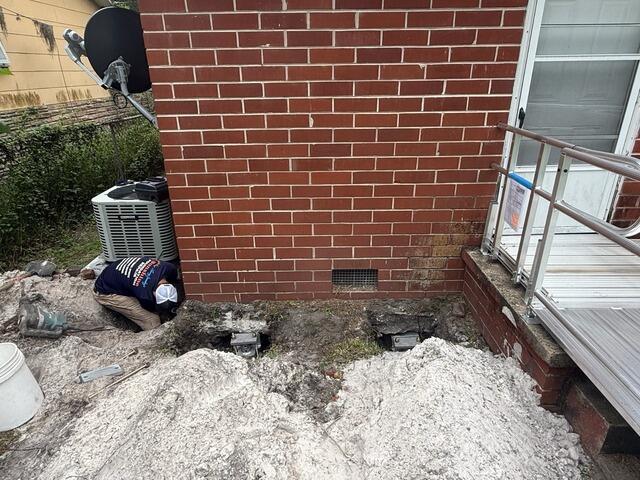
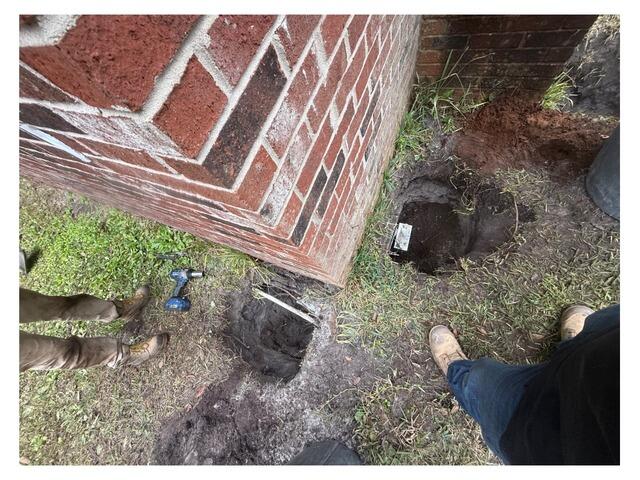
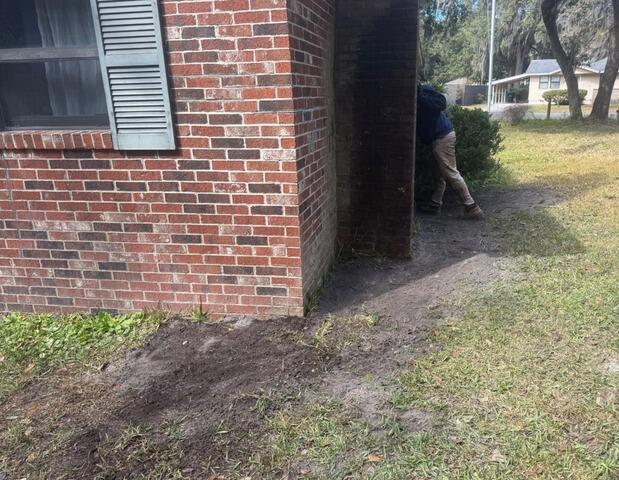
This Fernandina Beach home was showing signs of foundation settlement, including visible cracking and uneven areas near the side entrance. Our crew installed a set of helical piers to permanently stabilize the foundation and prevent further movement. These piers were strategically placed beneath the affected corner to transfer the home’s weight to stable soil layers below. After installation, the area was carefully backfilled and cleaned up, restoring both the strength and appearance of the property. Now, the homeowner can enjoy long-term stability and peace of mind knowing their foundation is secure.
This home in Fernandina Beach, FL was experiencing foundation settlement near the corner of the structure. To permanently stabilize the affected area, our team installed helical piers beneath the foundation footing.
Helical piers are engineered steel shafts that are mechanically advanced deep into stable load-bearing soil. Once properly installed, they transfer the weight of the home from shifting surface soils to stronger soils below, stopping further settlement and restoring structural integrity.
By installing these piers at the problem corner, we provided a long-term foundation support solution designed to prevent additional movement and protect the home for years to come.
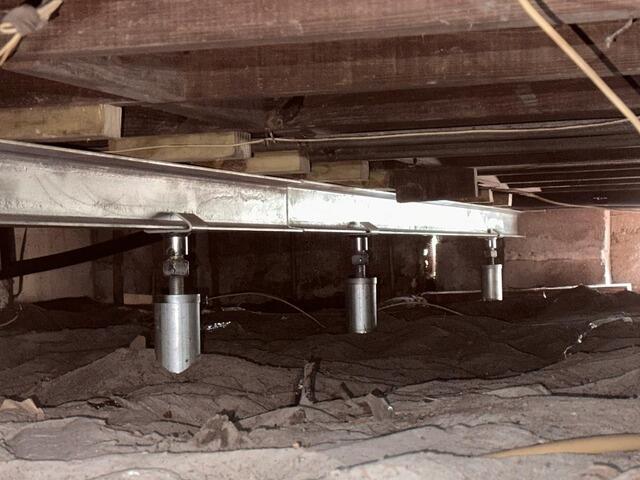
This Jacksonville Beach crawl space was showing signs of structural weakness, with sagging floors and makeshift wood shims attempting to hold things together. The before image highlights an unsupported, cluttered area that left the home vulnerable to further settling and damage. After our team’s work, a professional SmartJack support system was installed along a steel supplemental beam, providing solid, adjustable support to lift and stabilize the floor above. This upgrade not only reinforces the home's foundation but also ensures long-term durability and peace of mind for the homeowner.